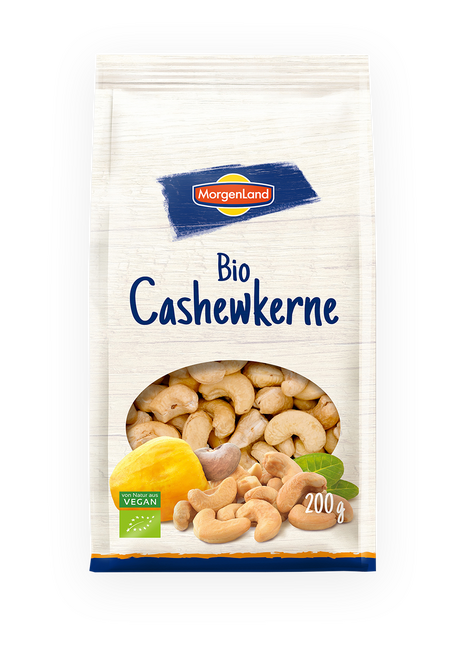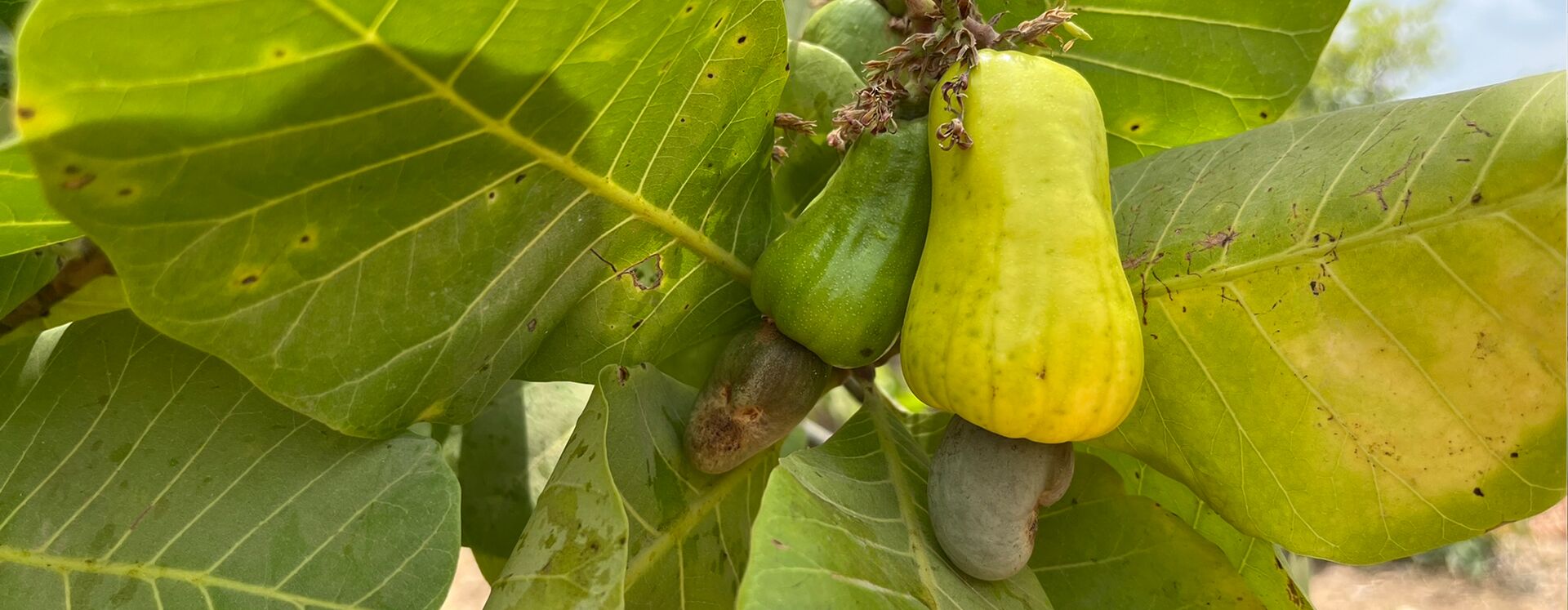
Did you know? Cashews from Togo are distinguished by their exceptional quality: they are exceptionally light in color—almost white—and possess a sweet, mild flavor that sets them apart from cashews originating elsewhere.
CASHEWS FROM TOGO
Cashews from Togo are not produced in a single location but rather through
a series of interconnected steps.
From cultivation on small farms and organization into cooperatives to local processing, a value chain emerges that relies on the interplay of these elements to function.
Since 2023, MorgenLand has been developing a project with local partners that structures and integrates these very processes.
The People Behind the Cashews
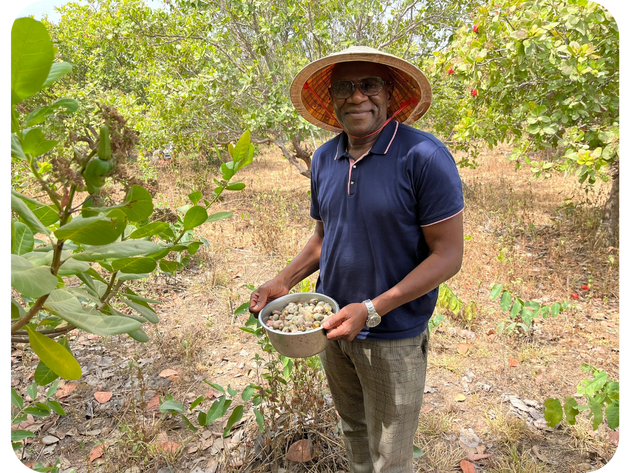
At the heart of the project is the collaboration with our partner Ibrahim and numerous local smallholder farmers.
In total, over 1,166 farmers are organized into 57 cooperatives, collectively cultivating an area of 2,778 hectares. These cooperatives enable smallholders to manage their land independently while pooling resources and coordinating processes—from cultivation and harvesting to processing. This joint organization allows for aligned workflows across the initial stages of the value chain and facilitates the provision of training.
From Tree to Raw Product
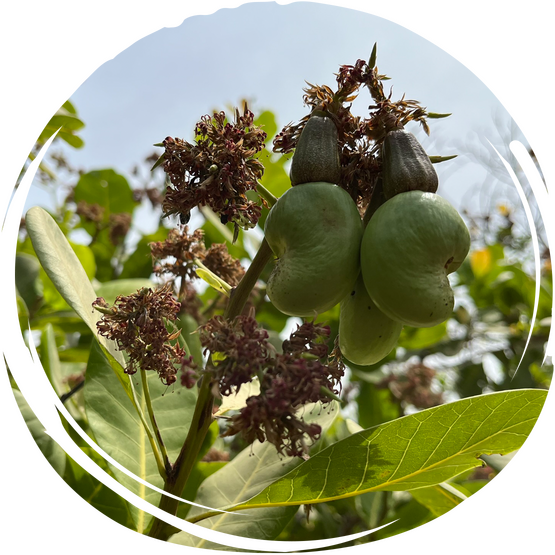
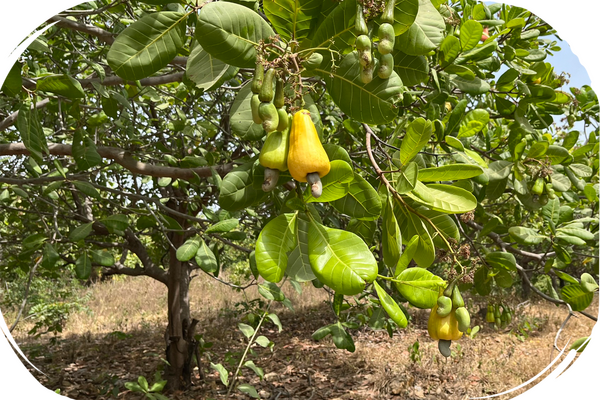
Togo offers the ideal climatic conditions for cashew cultivation, with a harvest season running from late February to early May. During this period, ripe cashew apples fall from the trees and are gathered by hand by smallholder farmers. The nuts are separated from the apples right in the field and collected in sacks. The harvested cashews are then sold by the smallholders to cooperatives, which handle further processing.

Processing in Sokodé
The cashews undergo further processing at a facility in Sokodé, which employs around 150 people.
Upon delivery, the nuts are first dried to prepare them for the subsequent processing stages. The actual processing then begins, consisting of several coordinated steps.
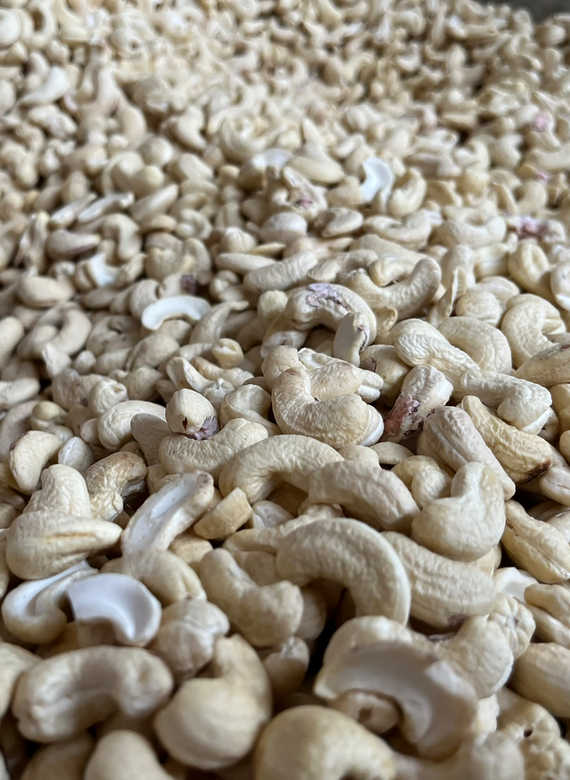
First, the nuts are steamed to loosen the hard shell surrounding the cashew kernel. Once cooled, the nuts are mechanically cracked open, exposing the kernel, which is encased in a thin, reddish-brown skin.
This delicate skin is removed before the kernels are dried again and subsequently sorted by size and quality.
Quality and Inspection
Before export, the cashews undergo inspection on-site in Sokodé.
Upon arrival in Germany, they undergo a further inspection before the products reach the organic retail market.