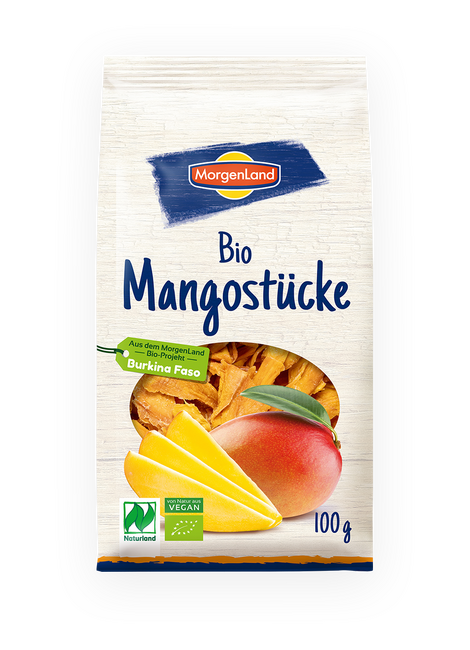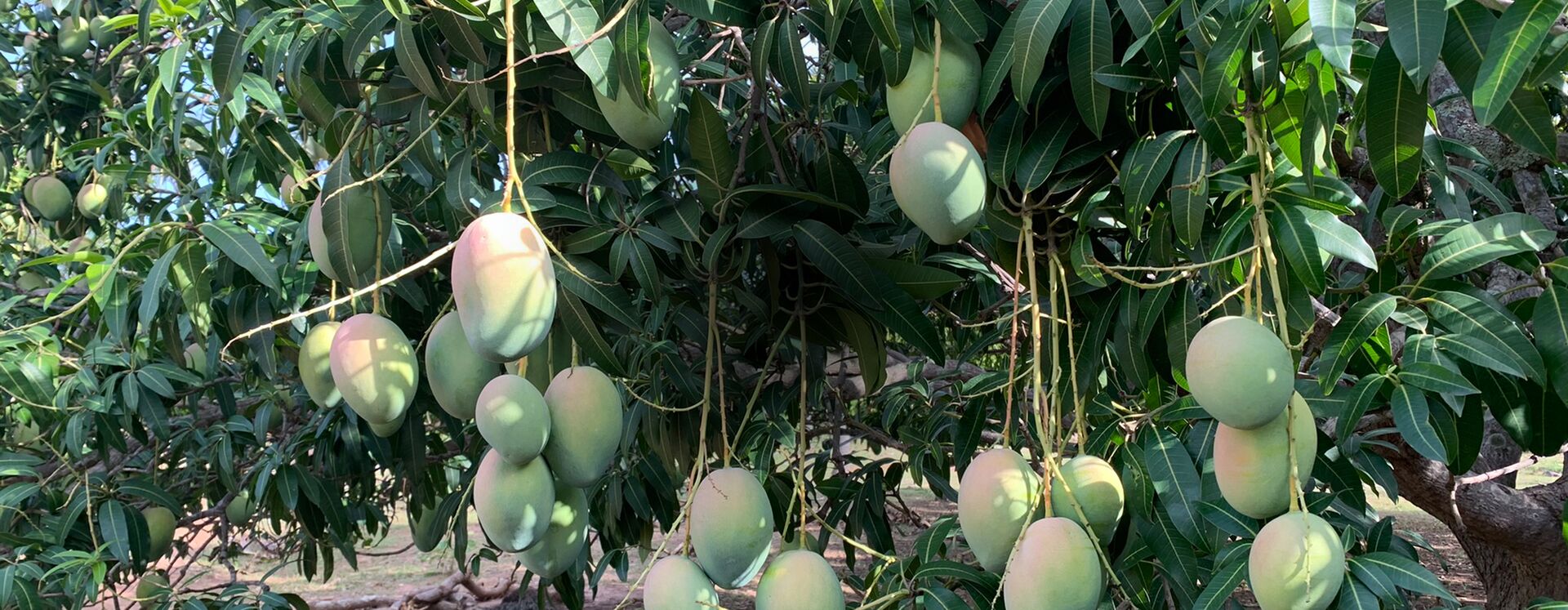
Did you know? There are over 1,000 different mango varieties, differing not only in color and flavor but also in shape and size. Consequently, approximately 16 kilograms of fresh fruit are required to produce one kilogram of dried mangoes.
MANGOS FROM
Burkina Faso
The mango harvest in Burkina Faso begins early in the morning.
When the fruit is ripe, farmers, families, and helpers come together to carefully
pick it from the trees. Every single fruit is the result of experience,
manual labor, and cooperation.
The MorgenLand organic mango cultivation project in Burkina Faso has been running
since 2011. It is about more than just cultivation; it is about the question:
How is a product created—and who is behind it?

The People Behind the Mangoes
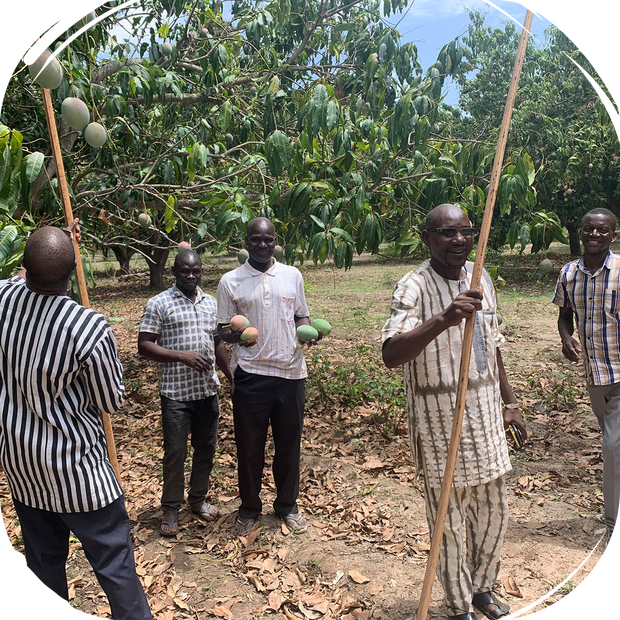
We have a long-standing partnership with Fogué.
A trained food processing engineer, he coordinates the project on the ground and works closely with local farming groups. He is deeply familiar with the region, the people, and the processing requirements, applying this knowledge in his day-to-day work with the local farmers.
Cultivation and processing are organized collaboratively—from harvest to final processing. Over the years, this has fostered a partnership built on trust, experience, and clear structures.
Today, seven farming groups cultivate a total area of around 350 hectares.
For you, this means receiving a product with a traceable—rather than anonymous—origin. Our project team visits the site regularly, overseeing every step of the process through direct collaboration with our partner farms.
From harvest to processing
The mangoes are grown in Burkina Faso under climatic conditions that allow for the cultivation of various varieties—including Amelie, Brooks, and Leepens.
The harvest season runs from April to July.
The fruit is harvested by hand and then transported to the capital, Ouagadougou.
At the processing facility, the mangoes are sorted, peeled, sliced, and dried.
Many of these steps are performed by hand, requiring significant experience and care. Around 200 employees are involved in the processing, the majority of whom are women.
The dried mangoes are then exported to Germany, where they undergo a final quality check before being packaged.
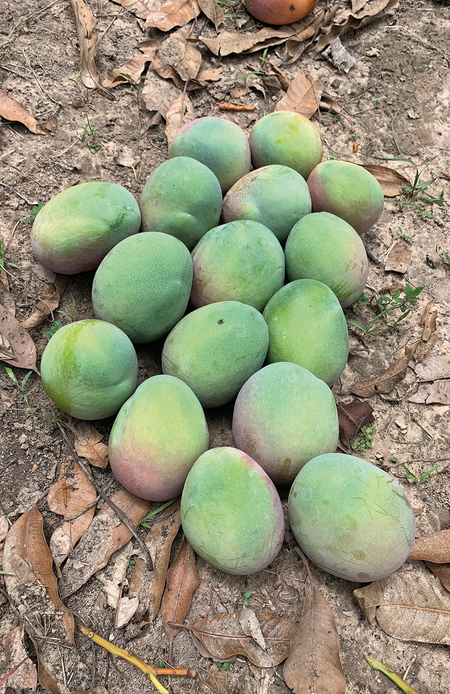
Several mangoes resting on dry leaves on the ground

Certification & Standards
The mangoes are certified in accordance with the EU Organic Regulation.
They also hold Naturland certification, with requirements regularly verified by independent inspection bodies.