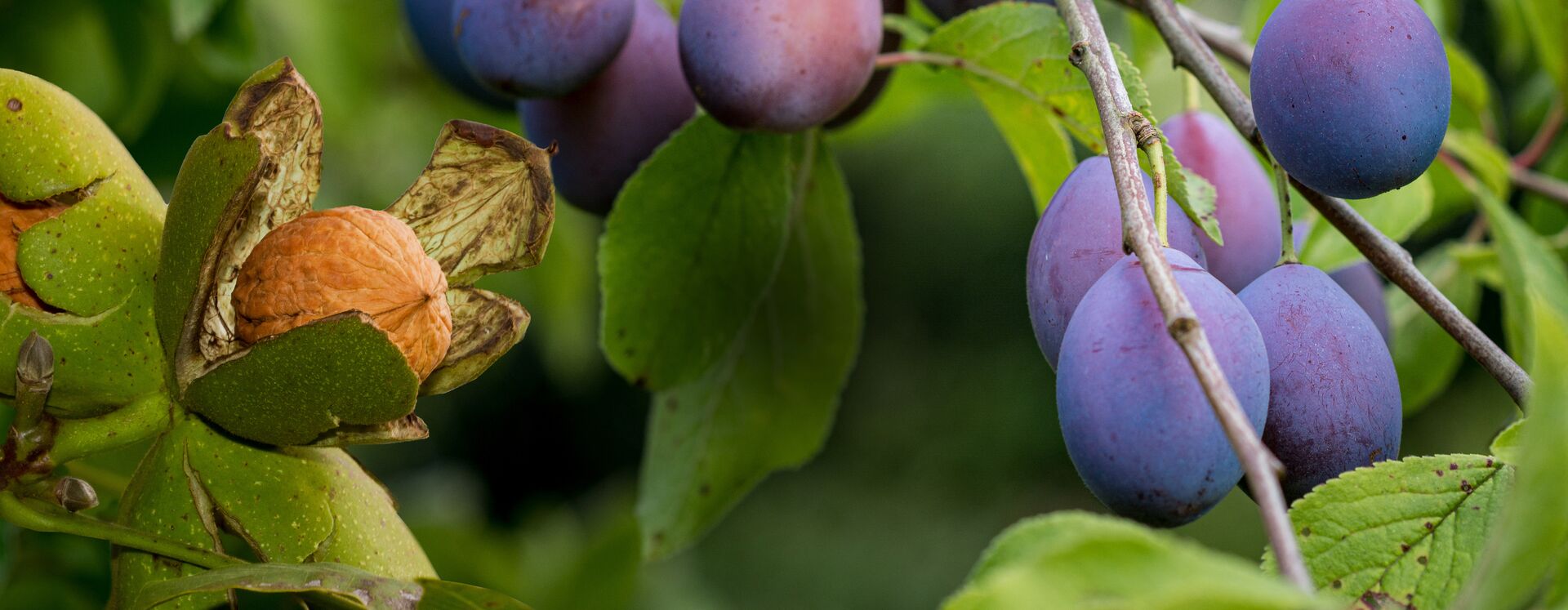
Known? – The nutshells are not waste but a valuable fuel source for the local population.
WALNUTS AND PLUMS FROM KYRGYZSTAN
A single glance at the landscape makes it clear:
In Kyrgyzstan, raw materials are produced under widely varying conditions—
from expansive valleys to high mountain regions. Since 2014, MorgenLand
has been developing an organic project in collaboration with local partners
that brings together two very different approaches: the harvesting of wild
walnuts from natural stands and the cultivation of plums in mountain regions.
This demonstrates the diversity of origins and the varied ways in which products
are created.
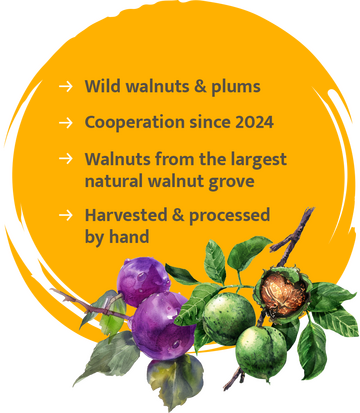
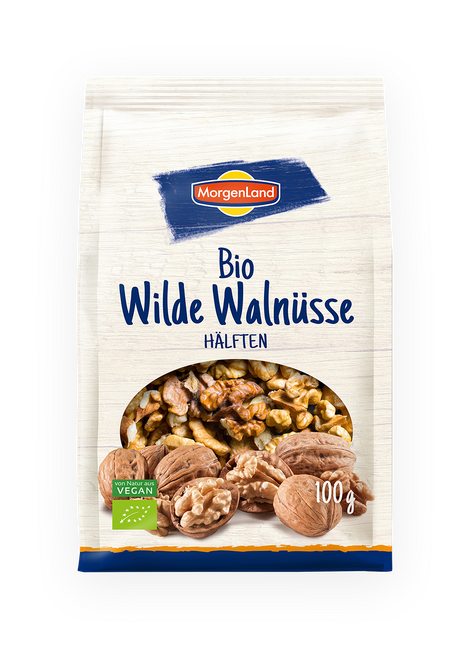
Wild walnuts from the Arslanbob Valley
Wild walnuts from Arslanbob Valley
Many people working in various regions are behind the project—from walnut harvesting to plum cultivation.
Around 600 farmers are involved in collecting walnuts, while over 1,000 agricultural operations grow plums. The project is coordinated by agricultural scientist Yury, who organizes the collaboration between cultivation, collection, and processing.
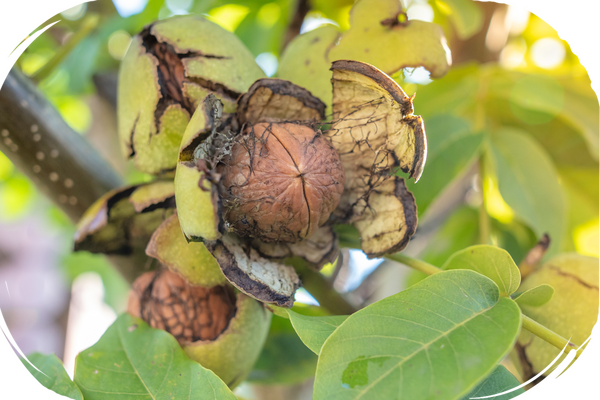
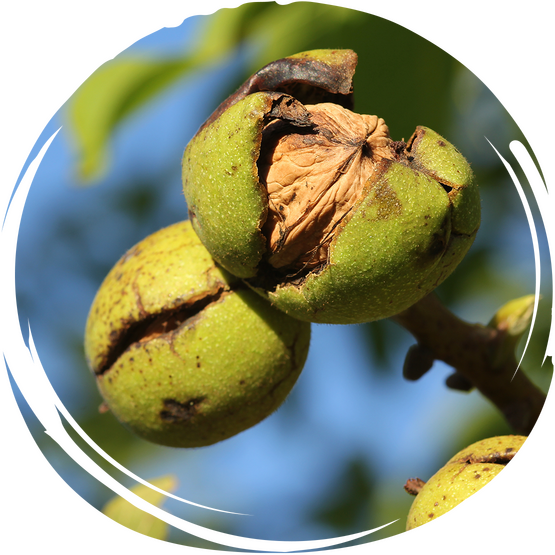
The Arslanbob Valley is located in southern Kyrgyzstan—a vast natural area spanning approximately 30,000 hectares. "Wild walnuts"—nuts from natural walnut groves—grow in this region. The walnut trees here grow without deliberate agricultural cultivation, reaching heights of up to 30 meters and living for as long as 1,000 years.
The land is state-owned and allocated to local farmers in smaller plots.
During the harvest season, farmers head into the forest with their families to gather the walnuts and bring them back to the village.
Once in the village, the nuts are dried, cracked, and processed further.
Wild walnuts are smaller than conventional walnuts, meaning that processing machinery is only suitable to a limited extent. Consequently, a large part of the processing is carried out by hand by seasonal workers. Around 600 farmers deliver their harvests to a central organization, where the subsequent processing steps are consolidated.
The walnuts are then packaged and transported to Germany, where they undergo final inspection.

Plum cultivation in the Jalalabad region
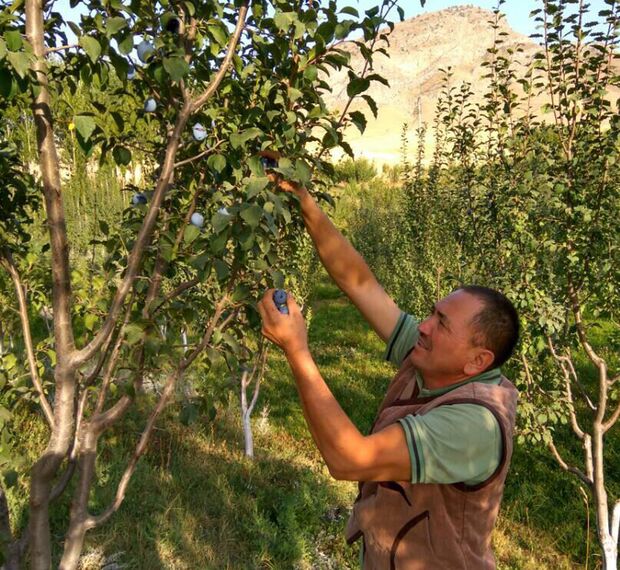
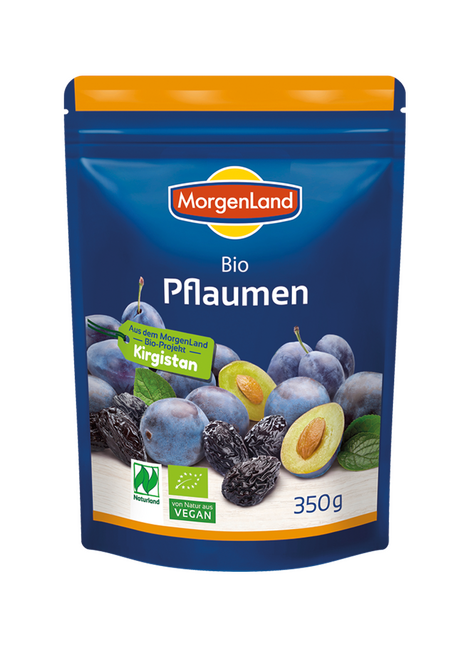
Plums from Mountain Regions
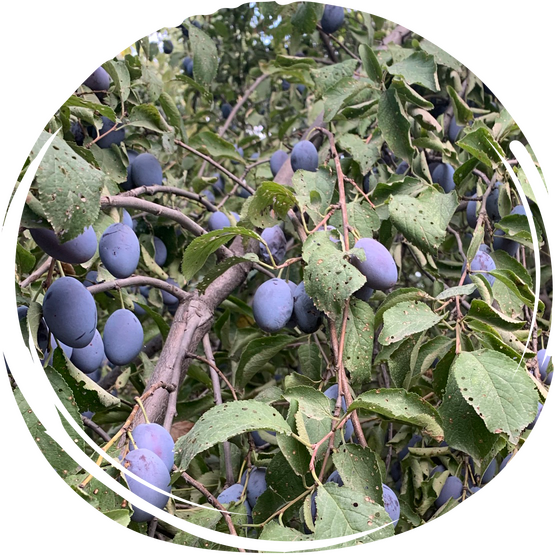
In Jalalabad, more than 1,000 mountain farmers grow plums. The orchards are situated at varying altitudes, ranging from approximately 500 to 2,600 meters, and are irrigated using local water sources.
During the harvest season—from late August to early September—the plums are hand-picked, pitted, and dried in small, local facilities.
The dried fruit is then packaged and transported to Germany, where it undergoes inspection before reaching the organic market.
Project Development
The project has developed over the course of several years:
2014: Collaboration begins
From 2017: Initial exports of walnuts and plums
Continuous expansion of local processing and organizational structures
In addition, training sessions and model plots are used to further refine cultivation and processing practices.
Certification & Standards
The products from this project are certified in accordance with the EU Organic Regulation.
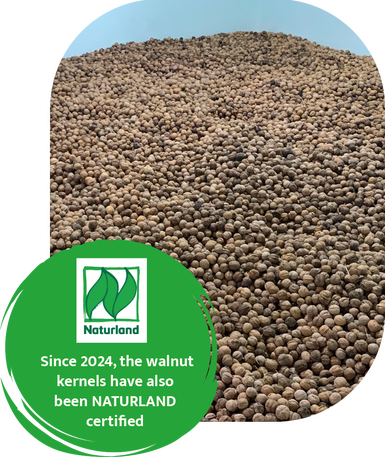
The walnut kernels also hold Naturland certification, with requirements regularly verified by independent inspection bodies.
These standards define how cultivation, harvesting, and processing are organized.